Google Authenticator, SMS codes or a security key for a casino account, compared in one table
2026-10-19
Logging in on a new device, the screen asks one more thing: the six digits showing on the phone. Even if the password has leaked, the door stays shut without that number.
A baccarat site account holds a balance, so this one extra step makes a real difference. Two-step verification is not all the same, though. SMS codes, authenticator apps and security keys are set side by side below.
1.What two-step verification stops
Two-step verification: a login that checks something held, like a phone or key, on top of the password.
Someone who only stole the password is stopped at the second step.
The same holds when a reused password leaks from another site.
2.SMS, authenticator app and security key compared
SMS codes
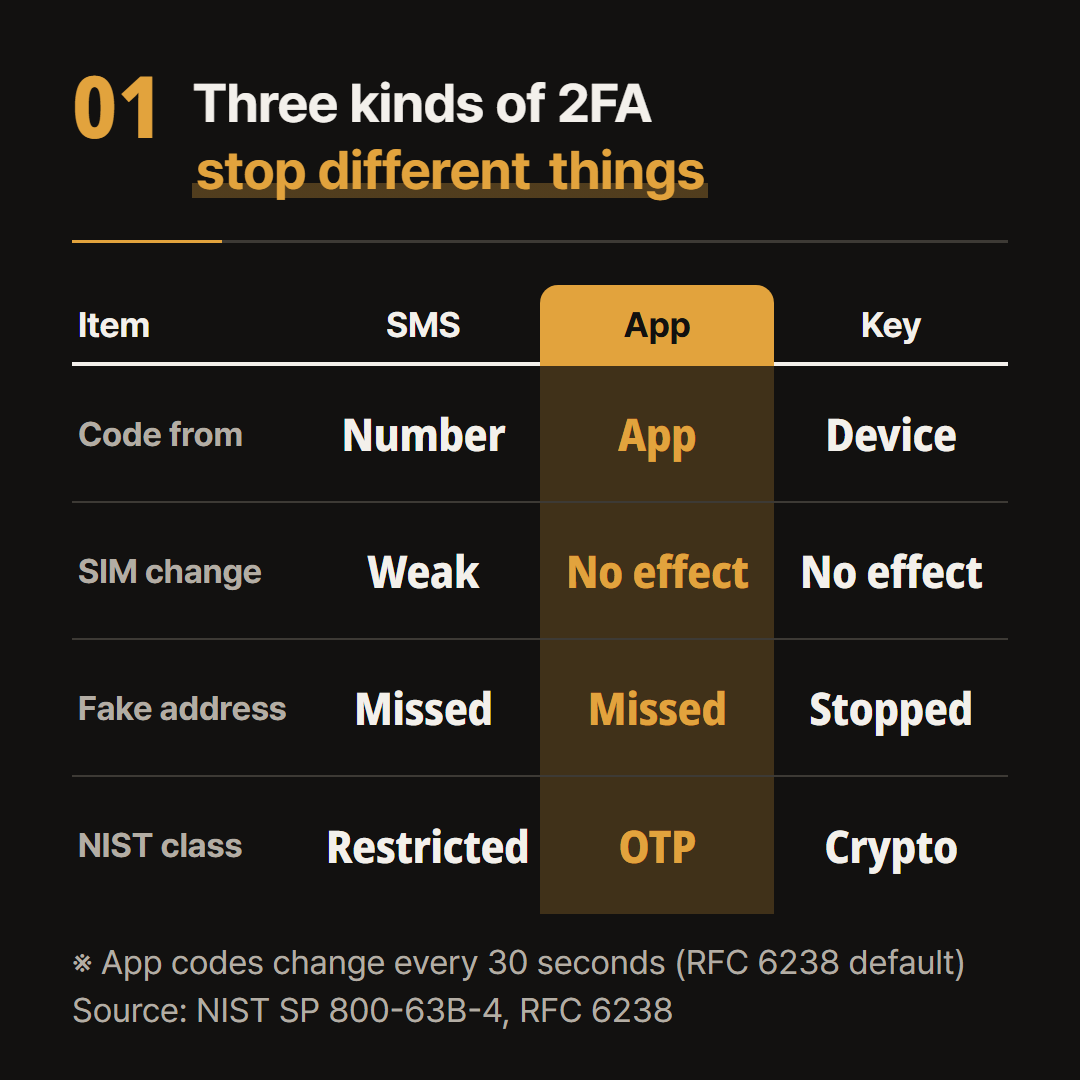
The most common method is typing a number received by text. The US NIST authentication guideline (SP 800-63B) classes SMS and voice codes over the phone network as restricted.
The guideline says verifiers should weigh risk signals such as a device swap, a SIM change or number porting before relying on the phone network. Moving a number to another SIM moves the texts with it. That is the weak point.
Authenticator apps such as Google Authenticator
Authenticator apps use a standard called TOTP.
RFC 6238, the standard document published in May 2011, recommends 30 seconds as the default interval between numbers.
The reference time is midnight UTC on January 1, 1970. Because the phone and the site share the same secret and the same clock, they produce the same number without talking to each other. Google's help page also says the app generates codes without internet or mobile service.
The standard recommends accepting one interval of delay, meaning the number from the previous 30 seconds. That is why a number entered just as it changes usually still works.
It is not tied to a phone number like SMS, so a SIM change leaves the app's numbers untouched.
Security keys and passkeys
A security key is a small device plugged in by USB or tapped by NFC, and a passkey keeps the same kind of key inside the phone. Nobody copies a number by hand; the device checks the site address and signs.
The NIST guideline says phishing resistance requires this kind of cryptographic authenticator. Not every site accepts security keys, so first look for that option in the site's security settings.
3.When changing phones
Switching phones with an authenticator app means the secrets that make the numbers must move too. Google Authenticator can move them by QR code by hand, or save them to a Google Account and sync.
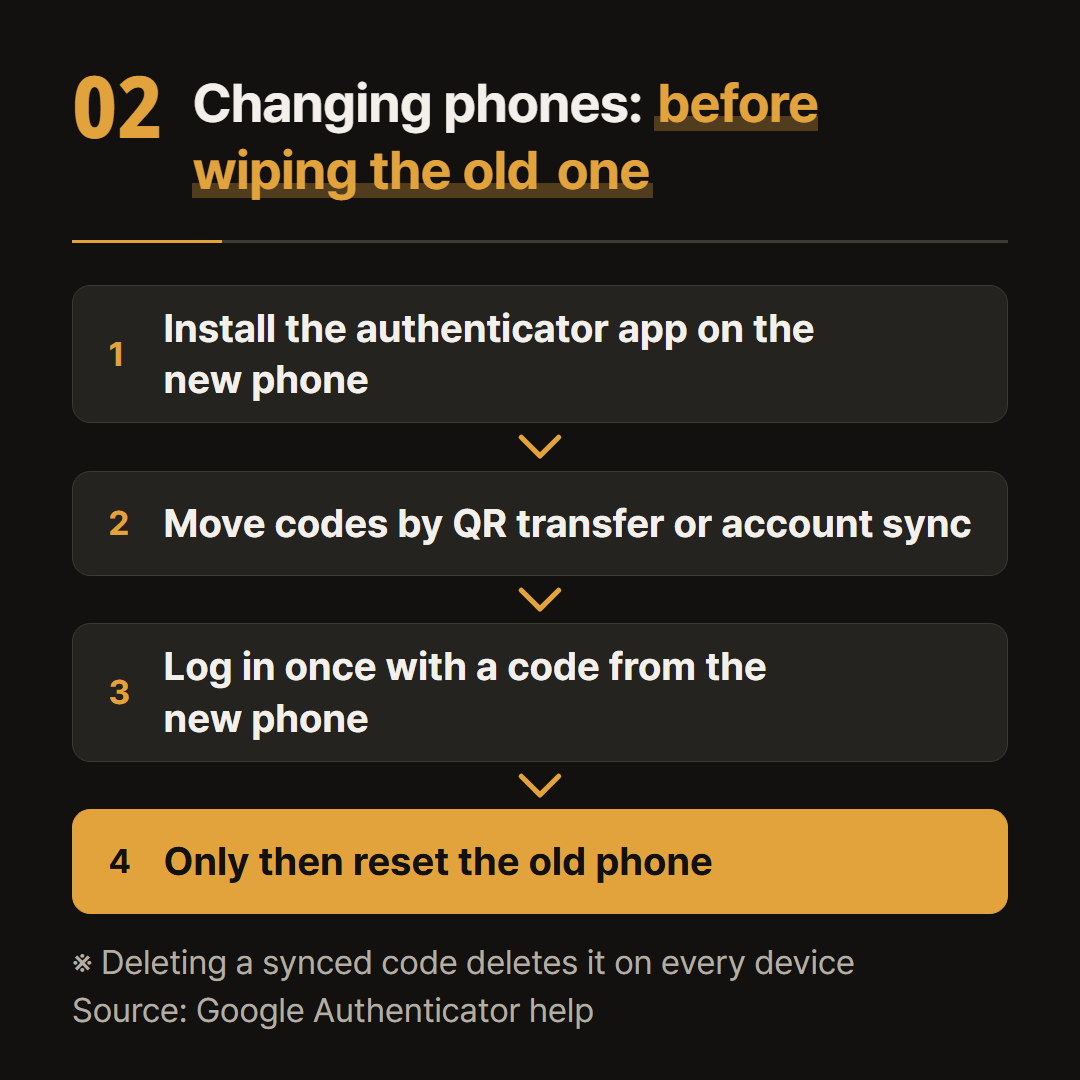
The help page says deleting a synced code on one device deletes it on every device. Before wiping the old phone, confirm that logging in works with the new one.

4.What two-step verification does not stop
The NIST guideline states that OTP authentication is not phishing-resistant. Type the password and the six digits into a fake address, and the digits go straight to the attacker.
So check the address bar before entering the number. How to spot a fake address one letter off is covered in the baccarat site address article.
5.Where to get help
In Korea, Article 246 of the Criminal Act makes gambling a punishable offence. Anyone in Korea who finds it hard to keep control can call the Korea Center on Gambling Problems helpline on 1336.
Three-line summary
- SMS codes are restricted in the NIST guideline and weak against SIM changes and number porting
- Authenticator apps make a new number every 30 seconds offline, but a number typed into a fake address goes straight through
- Security keys and passkeys check the address and resist phishing, but fewer sites accept them
Hiddenpick is a Windows program that keeps on its server the betting rules that pick owners do not make public, and runs them as they are on the PC of the person who received them through a referral code. It currently runs on Evolution live baccarat at Stake (stake.com). The program only detects the browser the user logged into personally, and the full flow is in the baccarat bot guide. We are recruiting national pickster representatives, and those selected receive benefits worth $12,000, a one-year pass (apply at hiddenpick.my/pickster).
- 25,000+ real shoes collected and analysed since September 2026
- 90+ baccarat tables from the lobby on one screen · refreshed every 0.35s · seated 2 to 4 seconds after a click
- Stops by itself at your take-profit and stop-loss · tie several PCs into one team and stop on the total
- No browser extension · your money stays in your own Stake account · 12 languages